


Translated by Moise Lena Jean Louis
It took a lot of determination, even audacity, to try to impose rock in Haiti in the early 2000s. At the time, young people in working-class neighborhoods were vibrating to the beat of Barikad Crew and Rockfam, the two bands that, with their twists and percussive rhythms, had definitively established Creole rap on the country’s music scene. Haitian hip-hop was alive and well in its golden age, cannibalizing other genres. While the choruses of Creole rap were becoming scandalous, a young man, with a guitar and a bandoulière, was taking refuge in another genre.
A Port-au-Prince boy blossoms into rock music
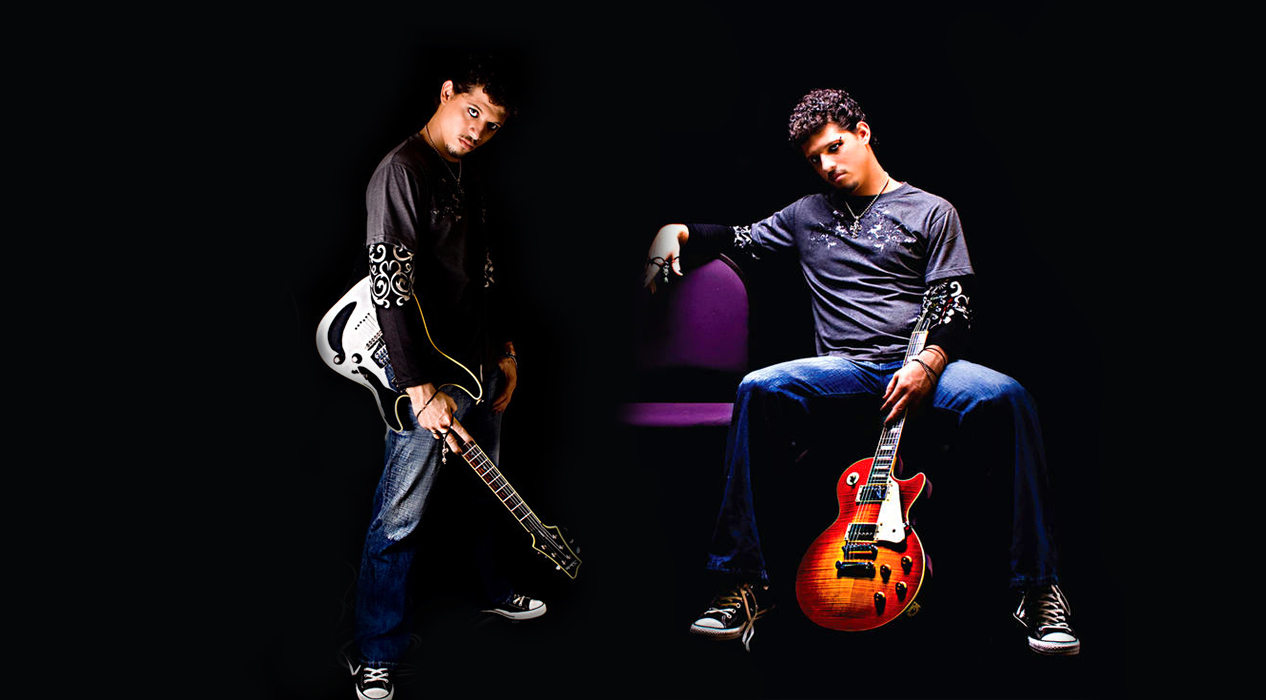
Born and raised in the Haitian capital, Yohann Doré discovered his true calling. At 15, he began playing guitar, influenced by Linkin Park and other American bands of the time. The teenager immersed himself in learning chords, reading tablature by the light of his cell phone, and the melodic revolt of his idols, creating a unique and inspired rock style.
At 17, Peine wrote his first jingle for a major mobile phone operator, a precocious and rare feat in the Haitian music scene. A multilingual, speaking Creole, French, and English, Yohann composes, arranges, and records. But above all, he dreams of having his own rock music in Creole. A new and adaptable style, unavailable on the Haitian art market, but one he hoped could convey the pain and beauty of their country with the sound of his electric guitar.
Countercurrent and Counterculture
Such an absurd commitment and quest were almost as absurd as introducing rock to the Haitian music scene. At the time, rock really had no place in Haiti. But while Kompa style reigned supreme at dances and on the radio, stadiums filled with rap, and playlists were dominated by Caribbean pop, Yohann, for his part, chose the outside world: he composed in the studio, gave numerous small concerts in the cafés of Pétion-Ville, and performed at parties and niche festivals.
These performances were often welcomed for their originality, but the artist remained confined to the public sphere, as a curious Francophone bourgeois and a bohemian singer. “Yohann didn’t sing for the people, he sang for an idea of the people,” a Haitian music critic summarized. “His goal is simply to combine rock with the soul of the drums.“
Everything in his rock pursuitrevolves around the goal of singularity: integrating percussion, horns, rare rhythms, and voodoo into a rock structure. A fragile but well-constructed bridge between these worlds.
2009: The eruption of a Creole rock
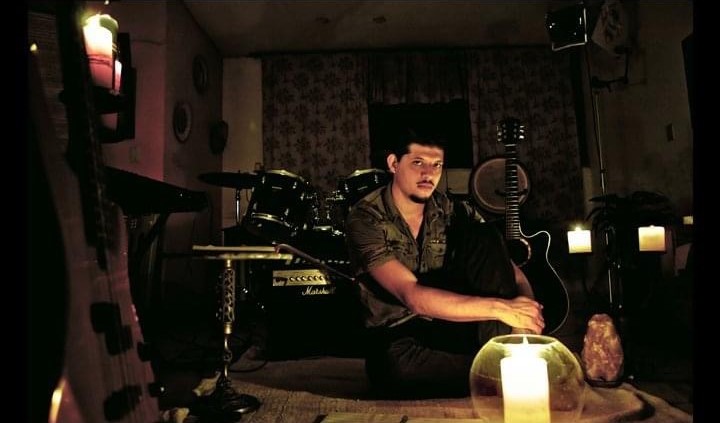
After years of experimenting and refining his unique approach to rock music, Yohann released the EP “By My Side” in 2009, followed shortly thereafter by his first English-language album, which earned him a warm welcome on the national scene. He performed at Musique en Folie, one of the country’s most prestigious festivals, attracting over 10,000 spectators. Following widespread acclaim, Yohann was subsequently dubbed “the Haitian rocker.”
His successes were symbolic and timely, leaving an indelible mark on Haitian musical culture and firmly establishing him as the first to achieve it. At the end of that year, he released an album at the Caribbean Convention Center, following the return of the Chiuku Award from MTV, where it had been improvised by Wyclef Jean, a Haitian rapper and singer born on October 17 in Croix-des-Bouquets, Haiti.
The momentum and journey he had embarked on were abruptly interrupted by the natural disaster of the Haiti earthquake on January 12, 2010. Yohann lost friends, collaborators, and supporters. This career hiatus and situation dragged on for months, while he dedicated himself to humanitarian aid, especially at community restaurants like Muncheez. But later, relaunched with renewed hope, as a radical overhaul of his release of a recorded video became a major viral phenomenon, where, beneath the chaos and public emotion, lies the fragility of an artist singing the encore of artistic survival.
“Ayiti men Rock” “Haiti, rock is here”: a founding act
Yohann returned to the music scene in 2010 with a new album, much loved by his fans. With an iconic and catchy title, conveying strong emotions and reflecting his fans’ recent experience during the earthquake, he titled it “Anmwey.” Like a final teardrop from the post-earthquake disaster, “Anmwey” features T-Ansyto of the group Kreyol La and Kenrick: the sound it encompasses, “mi-rock mi-compas,” has given new meaning to the bold form that rock music has taken through lyrics originally in Creole. Yohann later announced his next concept album, “Ayiti men Rock” “Ayiti, men rock” (Haiti, Rock is Here), a first in the country’s rock history.
At one point, the artist was funded by Haiti’s main telephone company, Voilà. He subsequently held a series of concerts in Port-au-Prince cafes, Haitian embassies, and some of Haiti’s most popular provinces. The album “Anmwey”, sung entirely in Creole, explores themes of resilience, chaos, and national identity shaped by pride. It was a cry of love and revolt, addressed directly to the people of Haiti, who, despite the country’s devastation caused by the natural disaster, figuratively continued to sing and take pride in their cultural identity.
By March 2011, “Ayiti Men Rock” “Haiti, rock is here” was completed and ready for the music charts. From the chosen titles and the creative attempt to combine electric guitars and Haitian drums, a story of passion served as the backdrop to Yohann’s consolidated rock artistic experience. In 2012, the first music video for the album “Nou Fini” (Ale net), or “We are Done” in English, was released, one of the group’s most memorable hits.
The video, produced by renowned producer Joe Dore of Krazystaff Prod, aired on Trip TV, channel 28, a local cultural station. Viewers later discovered that the actress in the video was Haitian-American rapper Kanis, formerly known as Niska Garoute.
An artist on the fringes
But the scathing criticism of rock’s debut era had just begun. While production companies embraced rock’s musical rhythm, just as they had with rap or even the French chasonnette, the Haitian public, with its massive tours centered on dancing and parties and its roots in the rhythms of the Kompa, remained indifferent and unresponsive to rock’s embrace. Yohann, however, remained faithful to his rock aesthetic, declaring, “Rock is not something to experiment with, it’s resistance,” he said that same year on a 2012 talk show. “I chose a way to recompose and support art and music on this platform, while remaining an independent artist.”
After years, the rock scene almost completely disappeared. Although rock singers were actively involved, some segments of the Haitian rock scene withdrew due to the political situation that was beginning to emerge during the political turmoil in Haiti following the 2012 earthquake. Some worked in the shadows, producing for other artists and composing for commercials, while maintaining the belief that Creole rock would one day find its audience.
2025: The Rocker’s Return
In November 2025, Yohann Doré resurfaced. His new single, “Nan peyi m,” a collaboration with Christopher Laroche, popularly known as Freedom, marked a turning point. Less abrasive, more poetic, the song blends alternative rock and the sounds of Haitian roots music. An introspection on identity, homeland, loss, and rebirth.
The music, accompanied by an ensemble of traditional rock guitars and percussion, reaffirms its artist’s vision: to create a distinctive Haitian rock music that reflects a hybrid imagery and finds a point of reference in the Creole language and rhythms of their heritages
The Legacy of a Pioneer
Today, rock artist Yohann Doré remains a unique rock singer and a highly respected figure in the Haitian cultural landscape. He hasn’t closed the door to his exploration of rock music; rather, he’s kept it open to opportunities as they arise, while also allowing other artists and emerging talents in Haitian art to interpret rock with their own instruments and perspectives. In a country where musical boundaries are often rigid, Yohann has been uniquely driven to explore the blend of tradition and modernity, color and beauty, electric guitar and drums.
Some Haitian bands founded after Yohann’s initial involvement in rock, such as Rev Zel, Chimen Rock, and Zenglen Do Roots, claim no influence whatsoever. Yohann, unwittingly, seems to have successfully planted the first seeds of a movement.
Here is the song of resistance.
Meanwhile, the contrasting reality for Yohann Doré has always been that of making music: creating sounds that were original to him and that, through the sonic language of rock, could take shape and substance, expressing Haitian musicality in a different way. His raw, hybrid rock expresses the pride, happiness, and hope of a people’s strength and the attempt to reinvent its vast and prosperous cultural and social identity.
Yohann’s art has established itself as a witness of the times in the Haitian artistic and cultural world, embodying an era of boldness manifested through his guitar, his sound, and his audience, in giving and introducing a musical narrative to Haiti.
“Ayiti men rock“. “Haiti, rock is here”
© Tous droits réservés – Groupe Média MAGHAITI 2025


